Fiber meets needs, adds to quality of life

Electric cooperatives are committed to improving quality of life for members and communities. This commitment began when electric co-ops were formed. It’s the driving force behind new and old cooperative programs and services.

“We feel it’s our responsibility to work toward constant advancement for our members and communities; by not only providing safe, affordable electricity, but so much more,” East Central Electric General Manager, Tim Smith, says.

What does it mean to improve the quality of life for others?

Studies show improving quality of life means achieving satisfaction across several aspects, including emotional and physical well-being, social relationships and engagement with others, and personal and professional development, including learning new skills.

For East Central Electric Cooperative member and ecoLINK subscriber Alice Perry, ecoLINK has checked all those boxes.

“I’m able to work from home when needed, take college classes to further my career, learn new skills and have peace of mind knowing my family is protected by a security system, all thanks to ecoLINK,” Perry says.
Perry said life drastically improved not only for herself but for other family and friends when ecoLINK came to the area.

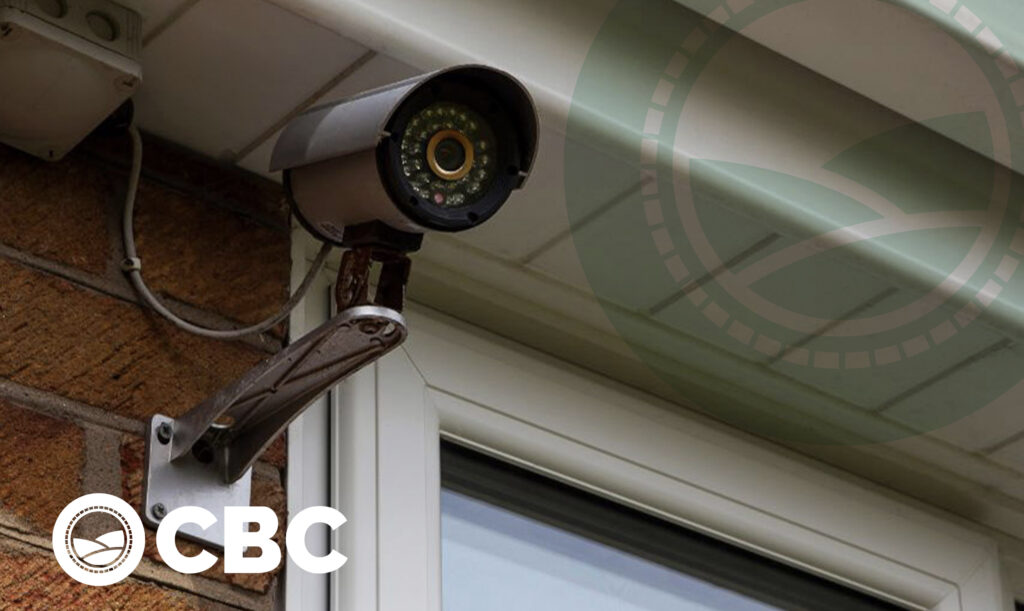
“My mother-in-law’s house had been broken into six times during renovations after flooding. Because of ecoLINK, we were able to have a security system installed. Since then, there’s been no issues,” Perry says.
Before ecoLINK, Perry says she had no real options for internet service. She tried using hotspots but was left unable to get much accomplished.  Without access to high-speed internet Perry said her frustration was at its brink when she found out she could order ecoLINK service.

“I’m just so thankful for the cooperative’s servant’s heart approach. They saw a need and are filling it,” Perry says.

Meeting the need for electricity in rural America was how it all began for electric cooperatives. Providing access to electricity was the first step for enhancing quality of life, but it’s certainly not the last. Fiber internet has brought us full circle and is now leading the way, enhancing lives for members and communities.
Setting the bar

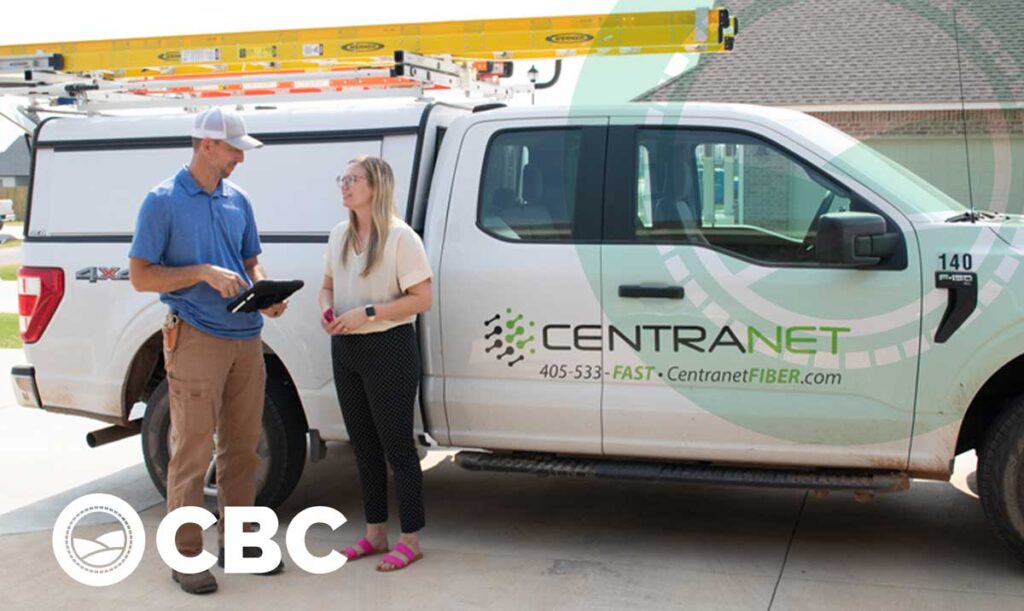
Long before opening its first feeder in July 2021, Centranet knew it wanted its subscriber experience to be different from other internet service providers.  

Part of providing such an experience is getting feedback from subscribers. Centranet regularly surveys its subscribers, asking them about their installation experience, and uses that feedback to make improvements in the overall process. 

“Our entire motive is different than a typical ISP,” said Jillianne Tebow, Vice President of Business Development and Marketing. “We’re not seeking to gain a large profit, rather, we are looking to solve the issue of rural connectivity and provide an incredible subscriber experience along the way.”

In just two years, Centranet has built more than 1,740 miles of fiber, connected more than 5,000 subscribers and made fiber internet available to 68 percent of the Central Rural Electric Cooperative membership.

In July 2022, Centranet’s first subscribers hit their one-year anniversary of having fast fiber service, and Centranet created a campaign to celebrate that with them.

“We developed a campaign that not only celebrates this milestone but also checks in to see how they are liking their service,” Tebow said. 

After some research, Centranet’s marketing team found a metric that measures customer experience with one simple question:  Using a 0-10 scale, How likely is it that you would recommend Centranet to a friend or colleague? 

“The average Net Promoter Score for ISPs is 30,” Tebow said. “That seemed pretty low to us, but to be honest, we really didn’t know where we would stand.”

According to NPS, scores higher than 0 are typically considered to be good and scores above 50 are considered to be excellent. Centranet has sent more than 1,000 emails in the first six months of the campaign, resulting in an NPS score of 86.

“We are ecstatic at our current results,” Tebow said. “It is a true testament to our employees living our core values and striving to go above and beyond each and every day. We genuinely care about our subscribers, and it shows.”

Life at a Crossroads

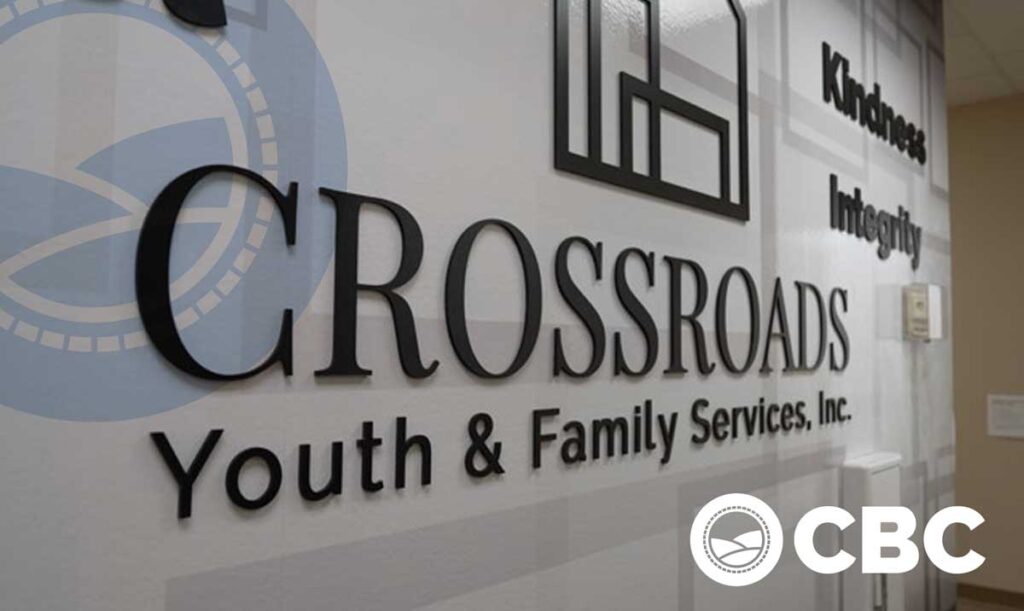
On Tecumseh Road in Norman, just off Interstate 35, hides a beacon of hope for children and teens in crisis. Crossroads Youth & Family Services offers a safe place to learn, grow and discover when a permanent home is unavailable.

“We are the only emergency shelter in Cleveland County,” said executive director Wendy Swatek.

Founded in 1969, Crossroads has 33 service agencies operating additional shelters and services across the state. However, this eight-bed shelter is the only one Cleveland County has to offer for teens. Brightly colored, hand-painted murals and a warm, inviting atmosphere provide a sense of safety and security at a time when the young people within its walls need it most.

“The purpose of our shelter is for kids to have a place to stay until a permanent placement is found. Either in a foster home, an adoptive home or possibly a group home,” Swatek said. 

This all-in-one facility houses a variety of spaces designed to give children and teens everything they need to thrive during a difficult time.

Teens have access to a full kitchen, art room and a resource closet where they shop for clothes, bedding and other essentials. A full-service classroom sits on the far side of the shared space along a glass wall. Teachers from Norman Public Schools come here to keep the children’s education on track.

“The kids play here. They sleep here. They watch movies here. All the things you would do in your normal home. We have kiddos here that need all the support they can get, and we’re here providing a safe environment for them,” Swatek said.

To provide this support, Crossroads offers counseling and other family services designed to give children and families the best opportunity for success. They integrated the Head Start program, an income-based service for 0 to 5-year-olds, into their services in 2008.

“What’s unique about Head Start is that it’s a wrap-around service,” Swatek said. “Not only do we educate children in the classroom, but we also have family advocates that serve families as a whole.” 

With 200 to 250 kids coming through the shelter each year, the staffing and resources needed to ensure things run smoothly are hard to come by. With 275 employees serving over 1,050 kids in Head Start, staying on top of things is difficult. It is even harder when an unreliable internet connection hinders staff’s ability to access vital information.

“We use OEC Fiber because it’s the only service we found that works,” Swatek said. “When the internet works, our staff can print, get on their computers and do their intakes with their counseling clients. It’s really changed the way we’ve been able to do business.”

Staff are not the only ones affected by poor internet connection. Kids in the shelter are encouraged to engage in everyday activities like video games, streaming movies and YouTube—all of which require internet. Losing connectivity limits their options and can amplify feelings of ostracization during an already difficult time.

Thanks to the high-quality service OEC Fiber provides, on-site safety at Crossroads has improved.

“We have cameras at our facility for safety purposes,” said Swatek. “There are times we have to pull footage up, and we’re able to see it with a lot of detail because of the strength of our internet service.”

It takes more than good Wi-Fi to make this facility run. Volunteers engage in various activities, from general maintenance and landscaping to mentoring children.

The areas in which people can help are vast. Everything from assisting residents “shopping” in the resource room to keeping the facilities in top shape is encouraged. 
Crossroads Youth & Family Services’ number one goal is to provide children with a safe environment where they can flourish. If you want to get involved in their mission, visit their website at www.crossroadsyfs.org to learn more and volunteer to improve lives.

Cooperatives build

Though the core business purpose of Ozarks Electric Cooperative is to provide reliable, affordable electricity, our larger mission is to make our corner of the world a better place. With that in mind, we knew building and bringing fiber broadband to our community was the right choice with OzarksGo. 

“We want to work to build trust, community, jobs and a better world,” says Kayla Clark, vice president of Member Relations for Ozarks. “The principles of a cooperative guide us in our efforts to provide fiber to our community.” 

Building Trust
Electricity has become such a necessary part of life that we often don’t even think about it until we don’t have it. Access to high-speed internet has become the next essential item communities need. OzarksGo has helped businesses become more efficient, people do more work from home and kids complete schoolwork from home. For us, providing reliable, affordable service is a chance to connect with our members. And we want our members to trust us.

Building Community
Ozarks loves our communities. We also care about the members and customers we serve. By helping build and maintain strong communities through our Ozarks Cares program, we can help improve the lives of our members. Each year, Ozarks Cares gives back thousands of dollars to help local nonprofits and thousands of volunteer hours. We are committed to our people. 

Building Jobs
Ozarks employs currently over 300 employees. We have 246 employees on the electric side and 61 employees on the OzarksGo side. This is beyond what our projected growth was in 2016 when OzarksGo began with only five employees. 

Building a Better World
Ozarks believes in offering our members the best possible service, the best possible experience and the best possible care. We are members, too, and are visible in the communities we serve. We live in the same areas, our children attend the same schools and we shop at the same stores. As a cooperative, we strive to work alongside the membership to ensure that everyone understands that we’re more than just an electric company. We are working with you to build a better a world, and OzarksGo fiber is a part of that.

Reliable Internet: both an urban and rural issue

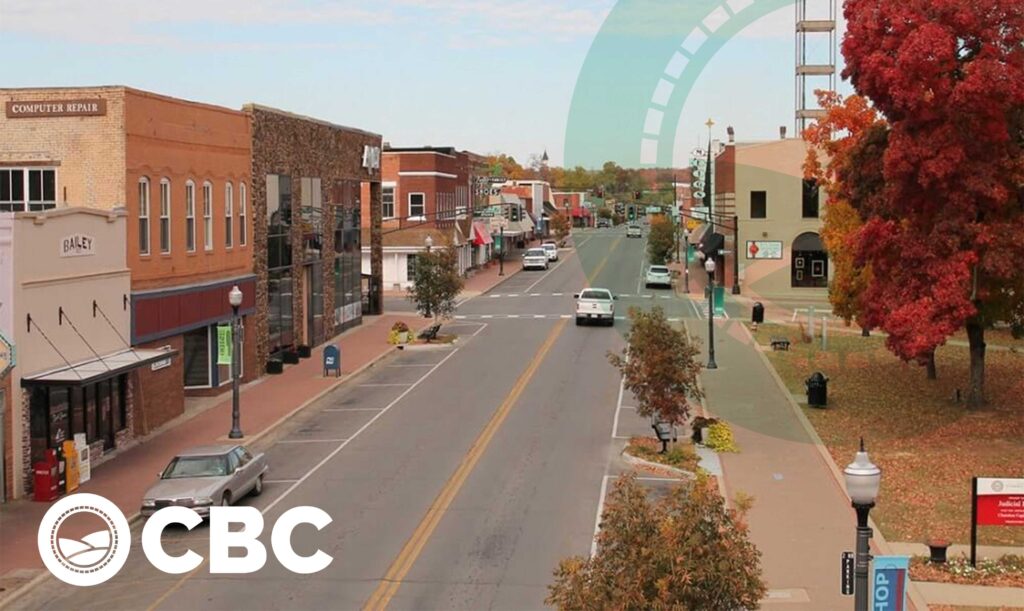
Downtown Tahlequah | Courtesy Photo

Broadband access is critical to local economies and small businesses, particularly in rural and underserved communities. This is why Lake Region Electric Cooperative (LREC) stepped up to the plate to build fiber optic broadband where no one else was willing to build, similar to electric service 80 years ago.

Rachel Dallis, attorney at law, started her law office in 2018 in downtown Tahlequah before moving to her current location near the Cherokee County Courthouse in 2020.

“I knew how great Lake Region fiber internet was because I had it at home for several years outside of Hulbert. When I first opened my business in Tahlequah, I had another provider, and it was unreliable; it would go out on rainy days, and the speeds were nowhere comparable to Lake Region,” Dallis said.

Lake Region is witnessing daily requests for internet service in larger communities. A faster, more reliable technology internet provider is still needed in many communities currently with other subpar internet service providers. Lake Region is weighing the cost of building mainline infrastructure into Tahlequah’s dense population to pick up more customers per mile of line while helping to offset the cost of building fiber into rural, less populated territory.

“I wasn’t expecting Tahlequah not to have fast, reliable internet for my business when I first opened. I needed a reliable, fast internet connection if I wanted my new law office to become successful,” Dallis said.

Tahlequah is no small town. It is home to a regional public university, two large hospitals, and home of the Cherokee Nation headquarters. Many residents and businesses that call Tahlequah home still lack access to fast, reliable, fiber optic internet technology. The broadband infrastructure movement across the nation and all the funding coming from the government must also consider towns like Tahlequah, lacking this critical infrastructure for the future.

The fiber network Lake Region installs today will be able to handle the increased demand for more bandwidth in the future. As that demand grows, only the network equipment would need to be upgraded over time, not the actual fiber cables.

Fiber optic internet brings opportunities to communities. Not just the opportunity for buffer-free video streaming but opportunities for businesses to expand and for our communities to attract new businesses. Our communities can also attract new residents, who may telecommute, and can only live here because of the power of fast internet.

Education the most noble technology objective

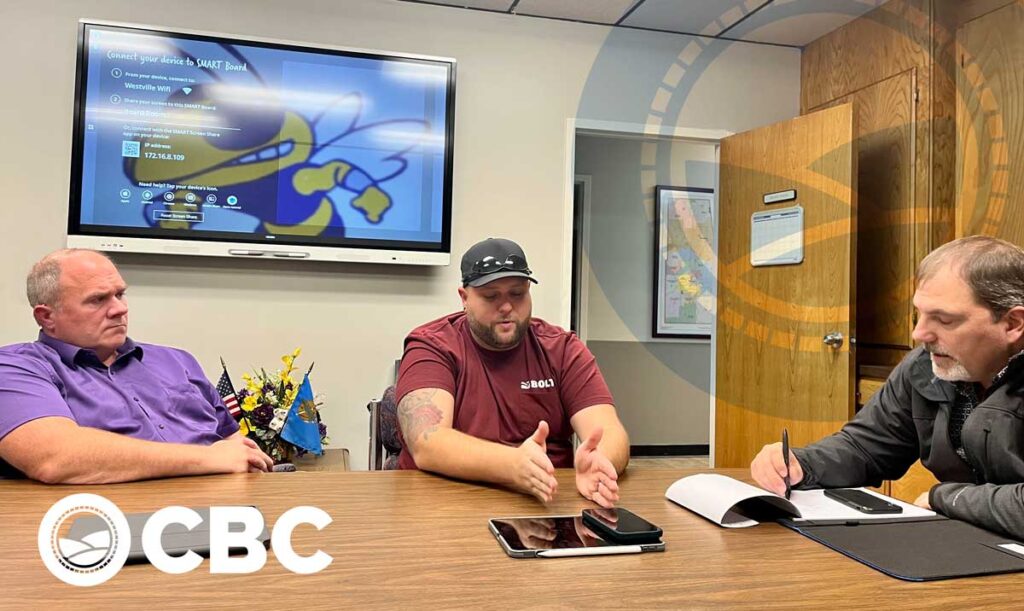
From left, Westville Public Schools Assistant Superintendent Ryan Swank, BOLT Fiber Optics Project Manager Zack Blevins, and Westville Public Schools Superintendent Terry Heustis discuss the technology requirements of a security project during a planning session.

As they endeavor to educate students, area schools focus on useful, practical applications for technology. Is there a more noble objective than educating our children and keeping them safe while they learn?

BOLT Fiber Optics has made it a priority to work closely with area schools, ensuring these institutions have access to the resources they need to both educate and protect the students to whom they are entrusted.

Westville Public Schools is one of BOLT’s longtime customers. Ryan Swank serves as both the school’s assistant superintendent and its director of instructional technology.

“Although we can teach without technology, everyone—teachers, staff, and students—is dependent on quality internet access and devices. Education would look very different without it,” Swank said.

And that dependence, said Swank, is not limited to the classroom.

“Everything depends on reliable internet in this day and time,” he said. “Our phone system, security cameras, door access, vape sensors, student and staff devices, fire alarm systems, data backups, auditorium sound system, cafeteria, freezer control systems, heating and air climate control, and virus protection are just a few of the reasons we need reliable internet access and quality support equipment.”

Important selling considerations for Swank include multi-layered security, service, support and product longevity.

“It is impossible for me to be the expert on every aspect of technology so I need to make sure I have access to experts when I need it,” said Swank. “And when you are responsible for taxpayer funds, you want to be a good steward of those funds.”

BOLT offers quality, fiber optic broadband services, hardware sales, and network maintenance. Assisting area schools with the process of securing valuable E-Rate funding is also a priority. While BOLT is based in northeast Oklahoma, it serves the complex technology needs of schools across the state.

“Every job is unique,” confirmed Zack Blevins, a project manager for BOLT specializing in security technology. “I spend time with superintendents, principals, and resource officers. We go over their expectations and concerns and do a site survey and design a custom solution that best fits that school district.”

For Westville Schools, BOLT has been the one-stop-shop for technology for more than two decades.

“Our school district has been doing business with BOLT for over 25 years,” Swank said. “They have always been there if we need anything at our school. I would give them my highest recommendation when it comes to security, service, and support.”

Why Co-ops are Different

The cooperative business model is special. This model is based on 7 Cooperative Principles that propel cooperatives to be member focused, locally controlled and democratically governed.

These seven principles provide guidance to all 30 electric cooperatives in Oklahoma: 

  1. Voluntary and Open Membership 
  2. Democratic Member Control
  3. Members’ Economic Participation
  4. Autonomy and Independence
  5. Education, Training and Information
  6. Cooperation Among Cooperatives
  7. Concern for Community 

This model is important because it provides the foundation in which electric cooperatives operate. By nature, cooperatives exist to be difference makers and to invest in the communities they serve. They strive to enhance quality of life in every way they can.

Electric cooperatives are aware of the digital divide in Oklahoma and have taken meaningful steps to be a part of the solution.

Ten distribution electric cooperatives that are members of the Oklahoma Association of Electric Cooperatives (OAEC) have formed fiber subsidiaries to provide broadband access in their service areas. These cooperatives have banded together to form the Cooperative Broadband Coalition (CBC) to advance the mission of rural broadband and to collectively represent the interests of those they serve.

The CBC is an independent organization that is affiliated with the statewide association, OAEC, which is voluntarily supported by 30 member-systems: 27 distribution electric cooperatives and three generation and transmission electric cooperatives.

While conditions are unique for every electric cooperative, the co-ops that have been able to form a fiber subsidiary were able to do so based on accessibility of grants and other favorable economic conditions. A few other electric cooperatives are evaluating the possibility to form a fiber subsidiary while others partner with existing providers, when feasible, to extend service to their rural membership. This is the cooperative difference. We invite you to learn more at: cooperativebroadband.coop

The Core of a Cooperative: Desire to Serve

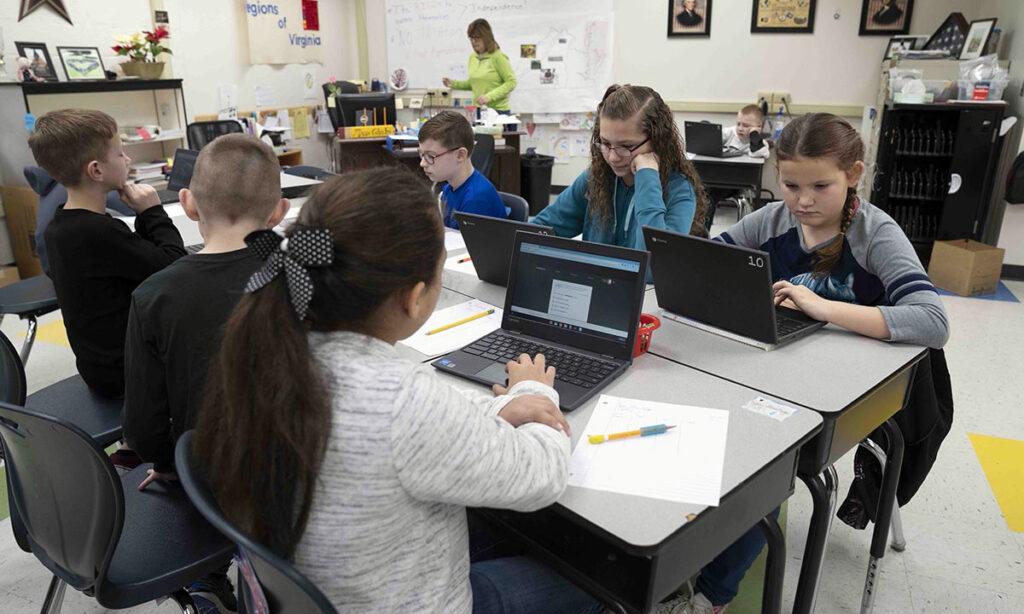
(Buena Vista, Virginia.) – Mountain View Elementary School in BARC Electric Cooperative service territory. Since being connected to high-speed fiber broadband internet, students and teachers have been able to streamline lessons. Fourth graders study reading and math materials on their Google Chrome books.
Photo by Alexis Matsui | NRECA

In essence, all cooperatives – including electric cooperatives – exist to serve. The premise of a cooperative is neighbors helping neighbors working towards a common goal. The cooperative business model allowed rural electric cooperatives to flourish around the country, bringing electric power where no one else would. Through this model, rural electrification became a reality. 


Today, access to rural broadband is a stark need; several electric cooperatives in Oklahoma and throughout the country are rising to the occasion to meet this necessity. A national study, the 2022 Rural Electric Cooperative Broadband Benchmarking Report, shows that rural broadband’s success is driven by co-ops’ desire to help the communities they serve. 

“At least 80% of the electric co-ops that participated in the study are seeing an increase in population, businesses or jobs in the communities where they delivered high-speed internet access. Electric co-ops listed community service and economic development as their main motivations for deploying broadband,” according to the report.

Oklahoma’s electric cooperatives power lives and empower communities. This commitment is evident in the 10 electric cooperatives that have gone beyond, providing reliable fiber broadband to the communities they serve. 

These cooperatives, members of the Cooperative Broadband Coalition, are enhancing quality of life in rural Oklahoma and making a positive difference every day. This is the cooperative way. Learn more at: https://cooperativebroadband.coop

Fiber Enables Growth and Opportunities

In 1998, KAMO Power and its 17 distribution cooperative members faced a daunting problem: an aging radio-based communications infrastructure connecting nearly 300 substations and 30 office buildings required a complete replacement to meet exponential data growth to operate a 21st century power grid. The optimum solution was to construct fiber on the approximately 3,000 miles of high voltage transmission line that KAMO operated. But the cost of constructing such a system seemed out of reach.

Following months of consideration, the KAMO Board of Trustees created K-Powernet, LLC. This subsidiary would market excess capacity in the fiber optic network that would contribute to the overall cost of the network and bring additional benefits to rural residents in Oklahoma and Missouri. Today, this network serves the needs of many schools, health care providers and cellular networks throughout the service area.

The immense bandwidth of the network enabled KAMO to also provide private cloud services for its members including hosted servers, backup services and layers of Internet security service. These services enable distribution cooperatives to utilize state of the art technology at a lower cost.

But the real growth of the network and largest benefit to rural residents in Oklahoma and Missouri has come through K-Powernet’s ability to connect its member cooperatives’ fiber-to-the-home networks to the global Internet. With connections to major carrier hubs in Kansas City, Tulsa, and Oklahoma City, K-Powernet completes a vital link in a network being built to tens of thousands of homes and businesses by member cooperatives.

Looking forward, KAMO will continue to invest in K-Powernet ensuring that rural residents will not be left behind in the Internet age. We continue to make major investments in this network year after year to increase capacity, reliability and resilience for future generations.

Electric Cooperatives Are Difference Makers

Electric cooperatives are difference makers. Wherever they are, you can count on the electric cooperative to make a positive difference and to serve as a pillar in the community. Because of their commitment to power lives and empower communities, electric cooperatives are, in many cases, well suited to provide reliable broadband for the unserved.


Co-ops keep members first, and that is why several of them have invested in establishing fiber subsidiaries that are bringing access to reliable broadband to parts of rural Oklahoma. Ensuring their members have quality of life is a priority. 

The vision of the Cooperative Broadband Coalition is to generate a brighter future for Oklahoma by broadening the access of reliable and affordable high-speed internet to all Oklahomans.

In other to fulfill its mission, the Cooperative Broadband Coalition exists to bridge the inequality of access to information, education and economic opportunity by expanding dependable, affordable internet to all rural Oklahomans. This is the cooperative difference.